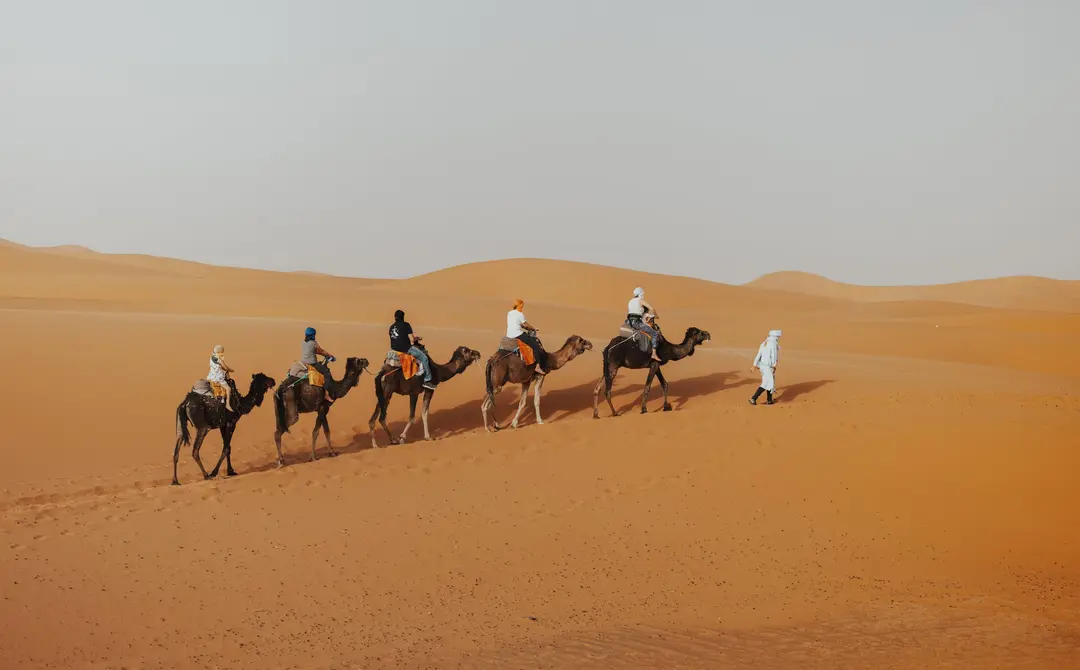
Sahara desert·2 min read
Ouarzazate and Aït Ben Haddou: where history meets Hollywood
A fortified earthen village on the old caravan route, a town of film studios and kasbahs, and the light that has drawn filmmakers to southern Morocco for sixty years.
South of the High Atlas the colours change. Green gives way to ochre, rivers run through ribbons of palm, and the villages are built of the earth they stand on. At the heart of this landscape sit two places that have welcomed traders for centuries and film crews for decades: Ouarzazate and Aït Ben Haddou.
Aït Ben Haddou: a village of earth
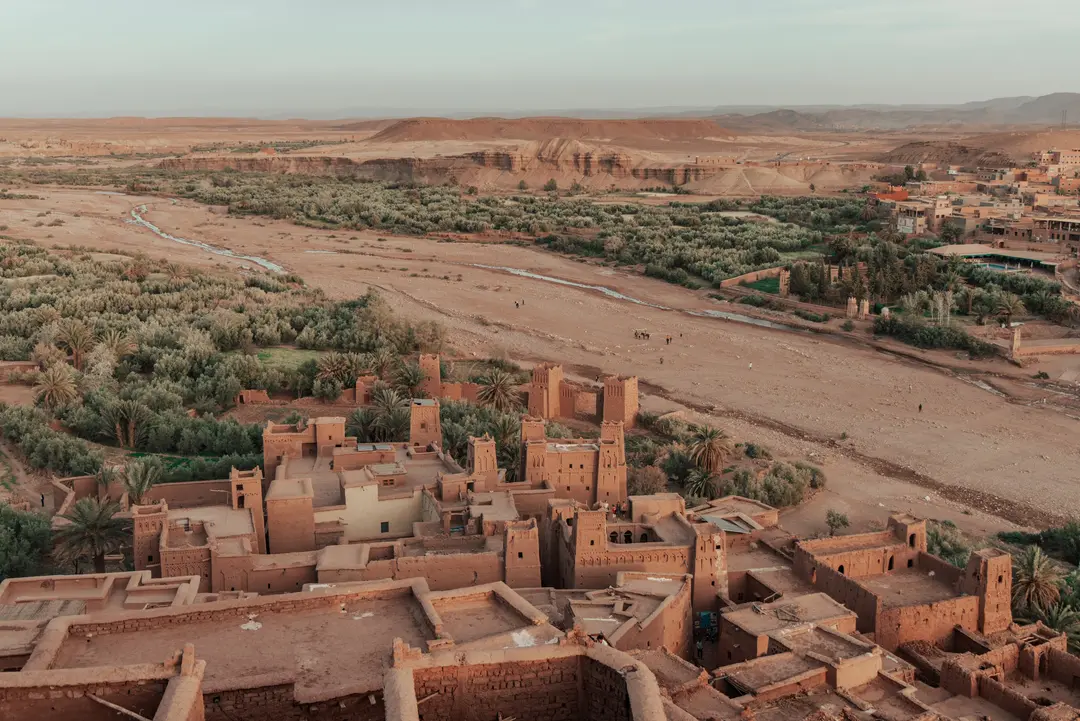
Rising in tiers above the Ounila river, Aït Ben Haddou is a ksar, a fortified village of rammed-earth houses, towers and granaries enclosed by defensive walls. It stood on the caravan route that carried salt, gold and goods between the Sahara and Marrakech, and it was listed as a UNESCO World Heritage Site in 1987.
Today only a few families still live inside the walls, but the ksar is very much alive. Cross the river on foot, climb the lanes past artisans’ doorways, and make your way to the ruined granary at the top. From there the whole valley spreads out below: the green river, the palm groves and the bare hills beyond.
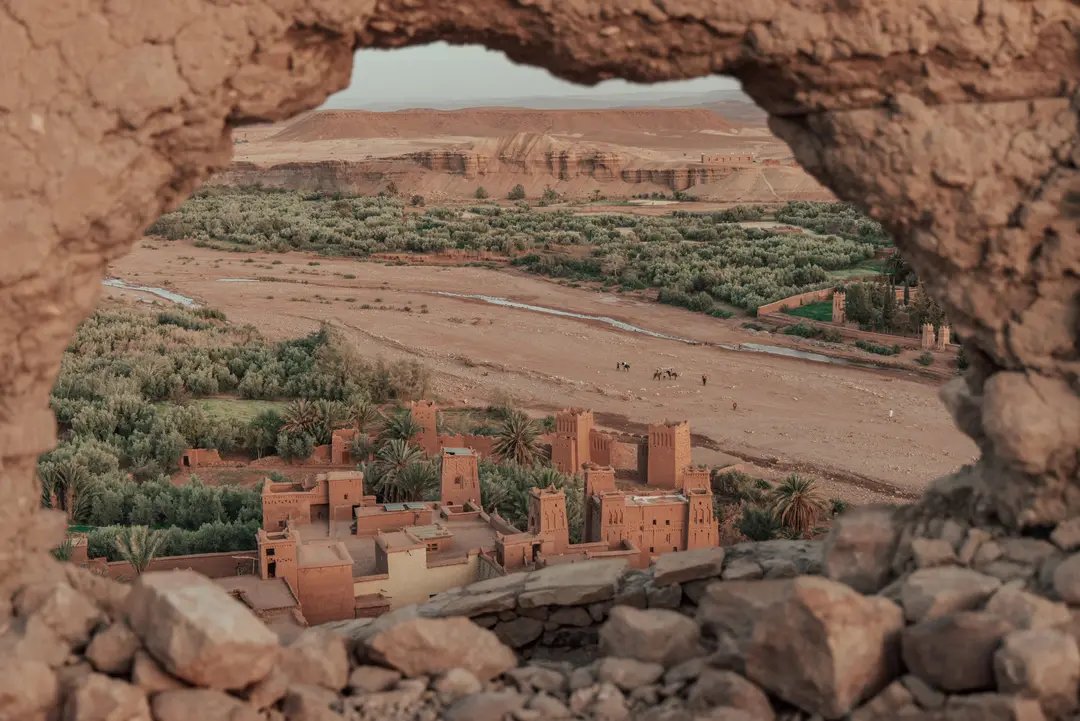
Go late in the day. When the coaches leave, the walls turn gold and the village falls quiet again.
Ouarzazate and the cinema
Thirty minutes away, Ouarzazate has earned the nickname “the door of the desert”, and also, more recently, Ouallywood. Since Lawrence of Arabia was filmed in the region in the early 1960s, its clear light, open landscapes and earthen architecture have stood in for ancient Rome, Jerusalem, Tibet and Egypt. Gladiator, Kingdom of Heaven and The Mummy were all filmed nearby, and Aït Ben Haddou itself became the city of Yunkai in Game of Thrones.
You can tour the town’s film studios to see sets and props from these productions. Then walk to the Taourirt Kasbah, a former residence of the Glaoui family, whose rooms still keep their painted ceilings and carved plaster.
Kasbahs, palms and a different light
Ouarzazate is the natural hub of the south. From here the Road of a Thousand Kasbahs heads east through the palm grove of Skoura and the Valley of Roses to the Dades and Todra gorges. The Draa Valley runs south through a hundred kilometres of date palms to Zagora. The two routes are among the most beautiful drives in Morocco.
Visiting with us
Aït Ben Haddou features on almost every itinerary we run between Marrakech and the Sahara, and on our longer tours we arrange a night at the foot of the ksar so you can see it at its quietest. If you’re already in the south, our tours from Ouarzazate reach the dunes of Zagora or Merzouga in just a few hours.