Sahara desert·2 min read
A night in Erg Chebbi: what to expect from the desert
The camel ride, the camp, the stars and the sunrise. Here's an honest guide to spending a night in Morocco's most beautiful dunes, and what to pack.
There are many deserts in Morocco, but only one Erg Chebbi. This sea of dunes near the village of Merzouga stretches for about twenty-five kilometres along the Algerian border, and its tallest dunes rise to around 150 metres. When people picture the Sahara, this is usually what they see. Here’s how a night there unfolds.
The arrival
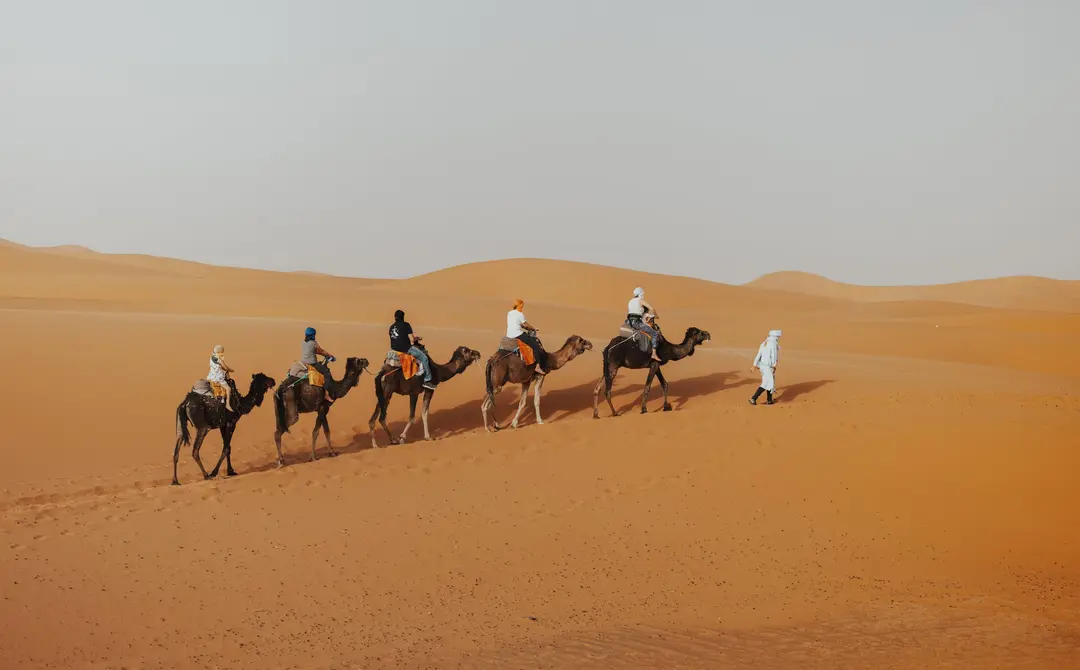
You’ll usually reach Merzouga in the late afternoon, after a long and beautiful drive. Your large luggage stays in the car, and you take a small bag with what you need for the night. The camels are waiting, kneeling in the sand.
The ride in
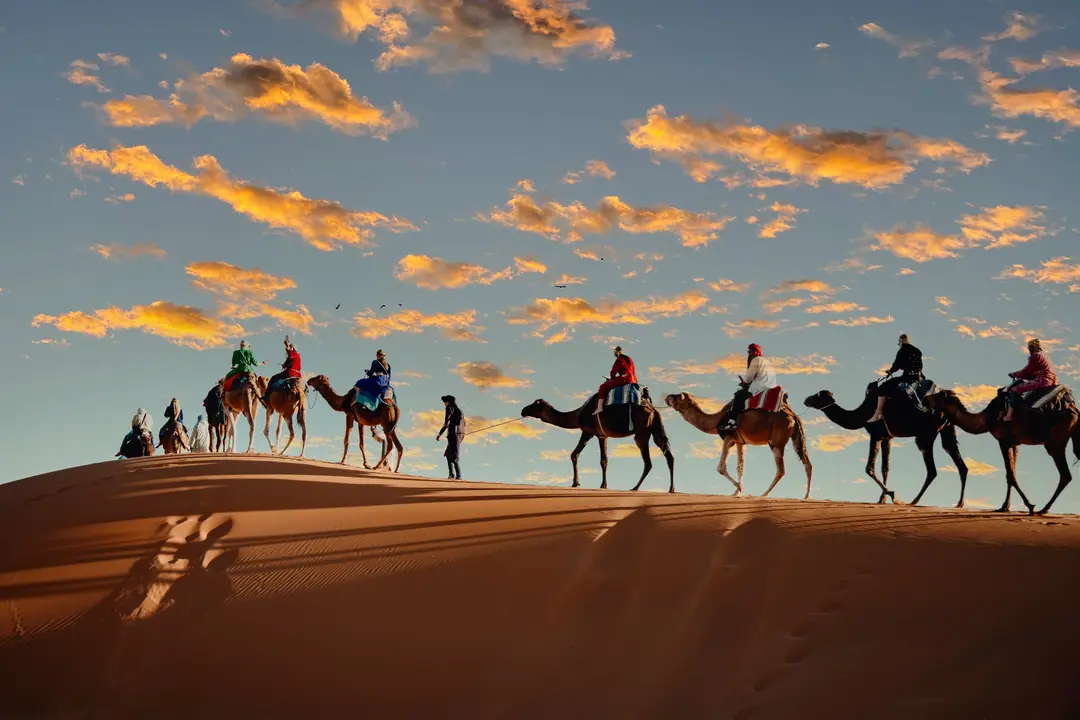
The ride to camp takes about an hour, timed so the sun sets while you’re still among the dunes. A cameleer leads the caravan on foot. Climbing on and off is the hardest part: lean back as the camel rises, and lean forward as it kneels. Riding is optional. You can walk alongside, or be driven to camp by 4×4.
The camp
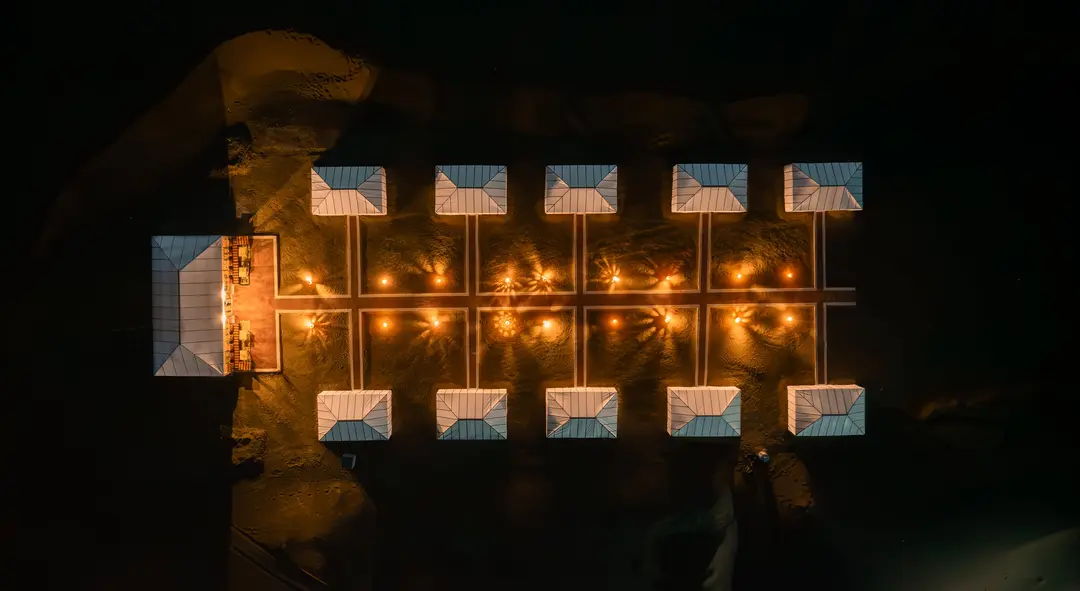
Our luxury camps are a long way from roughing it. Each tent is private, with proper beds, linen and an en-suite bathroom with hot water. Dinner is usually soup, a tagine and fruit, served in a dining tent or outside on a carpet under the sky. Afterwards there’s tea, and the drums come out around the fire.
Switch off your torch, walk a few metres from camp and wait for your eyes to adjust. The sky does the rest.
The stars
With no towns for miles, the night sky over Erg Chebbi is extraordinarily dark. On a moonless night the Milky Way stretches from one horizon to the other, and the stars are bright enough to cast faint shadows. If stars are important to you, tell us when you plan your trip, and we’ll check the moon’s phase for your dates.
Sunrise
Set your alarm. A little before dawn, climb the dune behind camp. It’s harder than it looks, so take it slowly. Then watch the light spill across the erg, turning the sand from grey to rose to gold. Breakfast is waiting when you come down.
When to go, and what to pack
Spring and autumn are ideal, with warm days and cool nights. In summer the days are very hot, so we plan around early mornings and evenings. In winter the days are sunny, but nights can drop close to freezing, though the tents come with thick blankets.
Pack layers, a warm top for the evening, a scarf against sun and sand, sunglasses, sun cream, a torch or headlamp, and shoes you don’t mind filling with sand.
Make it two nights
If you can, stay two nights. With a full day in the desert you can visit the Gnawa musicians of Khamlia, take tea with a nomad family, try sandboarding, and watch both a sunset and a sunrise without hurrying. It’s the change our travellers thank us for most often.