Cities & regions·2 min read
Fez: the timeless heart of Moroccan heritage
The oldest university in the world, a medina without cars and a tannery that has worked the same way for centuries. Here's how to understand Fes, and enjoy it.
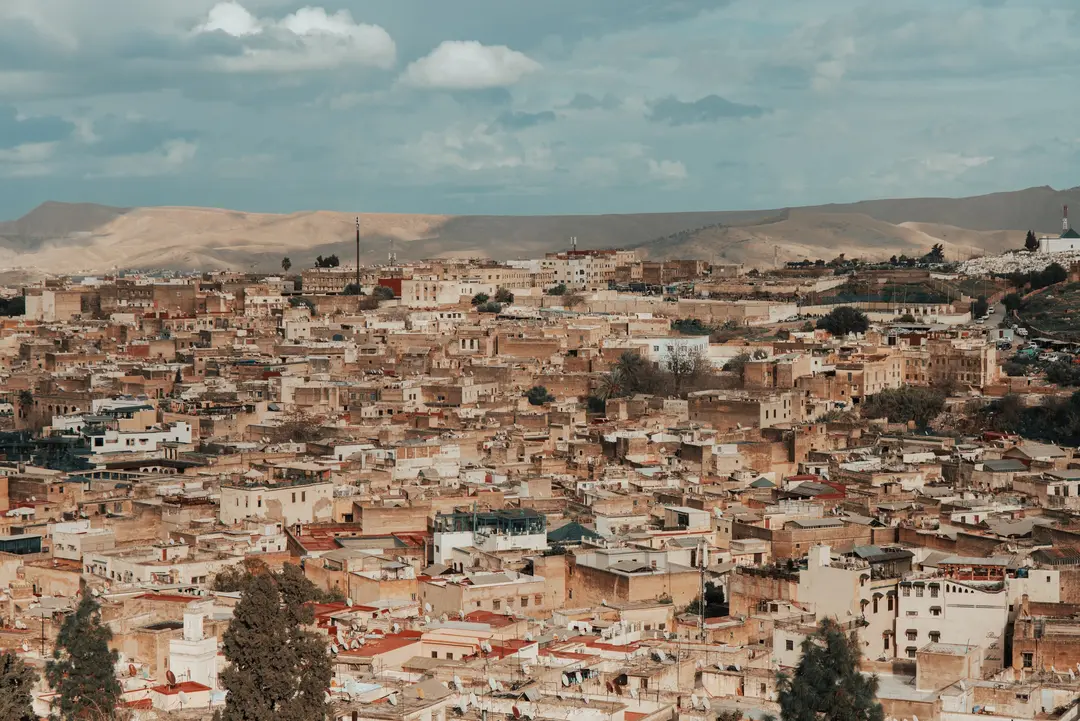
Fes doesn’t reveal itself all at once. Its old medina, Fes el-Bali, is a labyrinth of thousands of lanes, many too narrow for anything wider than a loaded donkey. It’s also the largest car-free urban area in the world. The noise you hear is hammering, bargaining and the call to prayer, never traffic. With a good guide, the maze starts to make sense, and the city turns out to be one of the most moving places in the Arab world.
A city of scholars
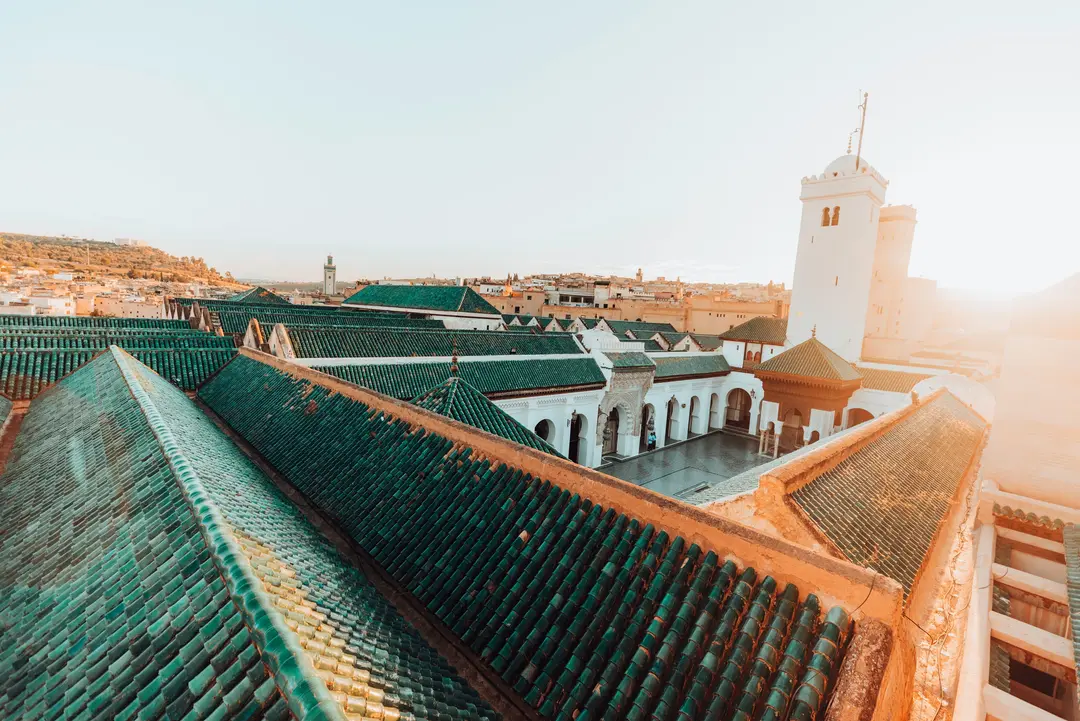
Fes was founded at the end of the eighth century, and under the Idrisid dynasty it grew into a centre of faith and learning. In 859, Fatima al-Fihri, the daughter of a wealthy merchant from Kairouan, founded Al-Qarawiyyin. It’s often described as the oldest continuously operating university in the world. Non-Muslim visitors can’t enter the mosque, but you can look into its courtyard through the great doorway.
Nearby, the Bou Inania Madrasa, built in the fourteenth century, is open to everyone. It’s a masterpiece of carved cedar, stucco and zellige around a marble courtyard, and its craftsmanship is as fine as any in Morocco.
The tanneries
From the terraces around the Chouara tannery, you look down on a honeycomb of stone vats filled with dyes and lime. Here, hides are still cured and coloured much as they were centuries ago. Mornings are the best time to visit, when the colours are brightest, and the sprig of mint you’ll be handed at the door is for the smell. It’s worth it.
In Fes, every craft has its own street, and every street has its own sound.
Crafts, street by street
The medina is organised by trade. You’ll find the coppersmiths hammering trays on Seffarine Square, the woodworkers around the Nejjarine fountain (whose old caravanserai is now a museum of wood), and the weavers, slipper-makers and dyers each with their own lanes. Watching them work is one of the great pleasures of a day in Fes.
Beyond the old walls
Fes el-Jdid, the “new” Fes, was founded in the thirteenth century. It holds the Royal Palace, with its famous brass doors, and the old Jewish quarter, the Mellah. In the late afternoon, drive up to the Merenid Tombs on the hill to watch the whole medina turn gold as the call to prayer rises from hundreds of minarets.
Visiting with us
Every tour that passes through Fes includes a full day with a licensed local guide. It’s the only way to see the city properly, and it’s the difference between getting lost and finding your way. Fes is also the natural starting point for journeys to the Sahara and on to Marrakech, and for the north: Chefchaouen, Volubilis and Meknes are all close by.